Rank #1 for Dumpster Rental Near Me
Learn how to rank #1 for dumpster rental near me with local SEO, Google Business Profile, reviews, and town pages that bring real calls.
By Digital Rank Solutions Team · Published Oct 5, 2026 · Updated Nov 4, 2026 · 15 min read
The Direct Answer
If you want to rank first for “dumpster rental near me” in your town, you do not need a bigger website. You need a clearer local footprint: a complete and active Google Business Profile, one page for each service and each town you actually serve, a steady stream of recent reviews, and a website that makes it easy to call, get a price, and book a dumpster in minutes. That is the whole playbook in one paragraph. The rest of this guide shows you how to execute it, step by step, without wasting money on tactics that do not move local rankings or generate calls. This is written for dumpster rental companies in the United States that serve a defined area — one town, a cluster of suburbs, or a metro. If you serve everywhere, you will rank nowhere. Local SEO rewards focus. The companies that win are the ones Google can clearly match to a specific service, in a specific place, with real proof that customers trust them. For the full service behind this playbook, see dumpster rental SEO. The strategy below is the same structure we use for clients, broken down so you can understand it, audit your own presence, and decide what to fix first.
Why “Near Me” Is a Different Kind of Search
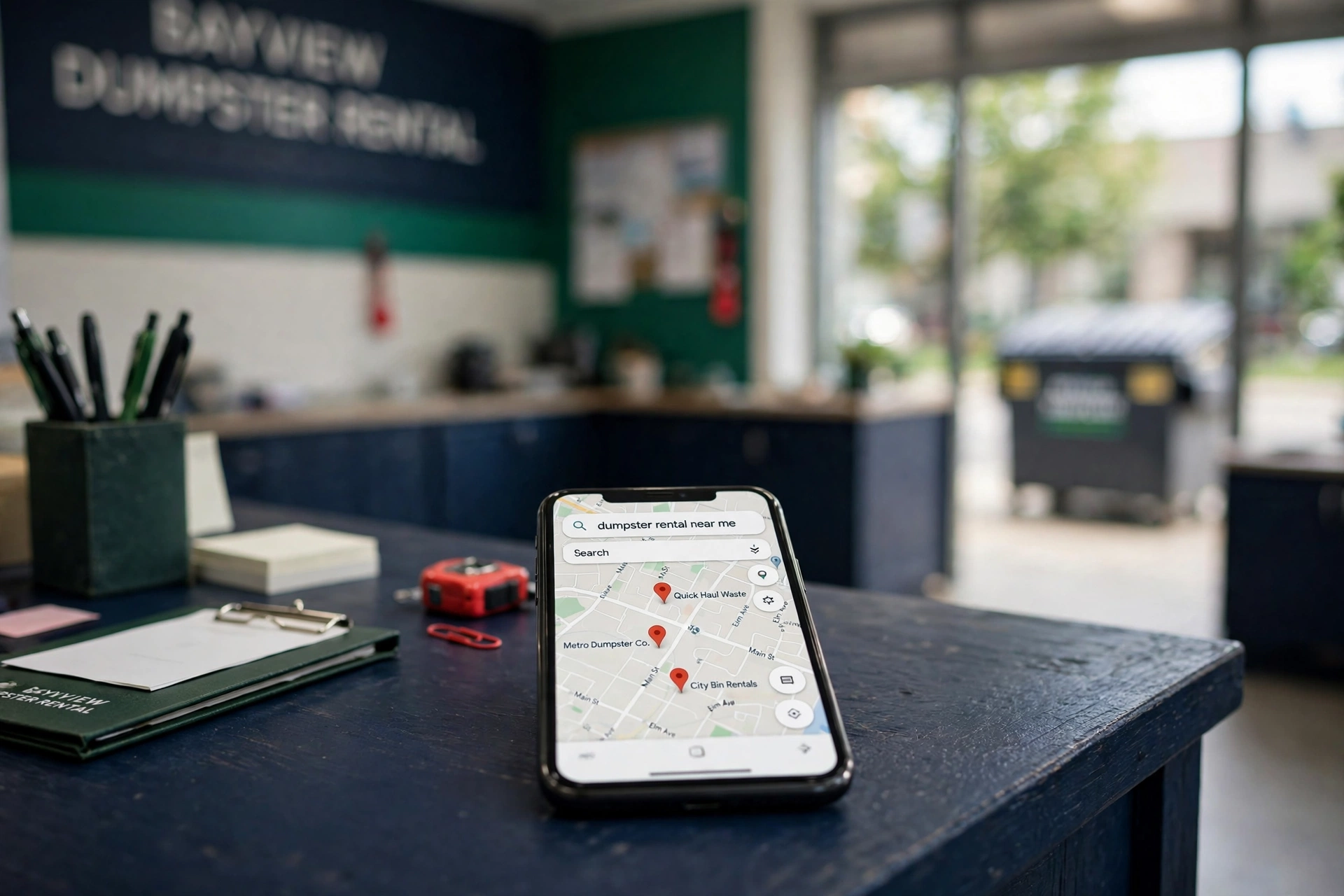
A search for “dumpster rental near me” is not a research search. It is a buying search. The person searching usually has a project starting soon — a remodel, a cleanout, a roofing job, or a construction cleanup — and they need a container delivered, not a lecture about waste management. That changes everything about how you should optimise. A generic homepage that talks about “quality service” and “great prices” will lose to a competitor whose profile shows recent reviews, clear service areas, photos of real trucks and containers, and a page that answers the exact question the searcher asked. Google understands this intent, too. For local searches, it does not simply rank the website with the most pages. It ranks the business that is relevant to the query, close to the searcher, and prominent — meaning well-reviewed, well-linked, and consistently present online. Your job is to make all three signals obvious, not to trick the algorithm. Relevance means your profile and your pages use the same language your customers use. Distance means your service area is clearly stated and consistent. Prominence means other people vouch for you: reviews, mentions, links, and activity over time. If any one of those three is weak, you will struggle to hold the top spot, even if the other two are strong.
Step 1: Fix Your Google Business Profile Before You Touch Your Website
Most dumpster rental companies start with their website. That is backwards. For “near me” searches, your Google Business Profile is often the first thing a customer sees, and in many cases it is the only thing they need to decide whether to call you. Start with accuracy. Your business name, address or service area, phone number, website, and hours must be correct and must match what is on your website and on other directories. Inconsistent information confuses Google and confuses customers. If you have changed your phone number or moved your yard, update it everywhere, not just on your website. Next, complete every section Google gives you. Choose the most accurate primary category, add relevant secondary categories, and list your services in plain language: residential dumpster rental, construction dumpster rental, roofing dumpster rental, cleanout dumpster rental, and the container sizes you actually offer. Do not list services you do not provide. Relevance is built on accuracy, not on stuffing every possible keyword into a field. Then add proof. Upload photos of your trucks, your containers, your yard, and your team at work — real photos, not stock images. A customer who is about to let a truck drop a heavy container on their driveway wants to see that you are a real, professional operation. Photos also help Google understand what you do and where you work. Finally, use the profile actively. Post updates regularly: new service areas, seasonal cleanout offers, container availability, or a short post about a recent project type. An active profile signals to Google that the business is open, operating, and engaged. A profile that has not been touched in a year looks abandoned, even if the business is busy. For a deeper look at how to structure the pages that support this profile, read Dumpster Rental Marketing: One Page Per Town, One Page Per Service — The Exact Structure That Ranks at dumpster rental marketing.
Step 2: Define Your Real Service Area — and Stick to It
One of the most common mistakes in local SEO for dumpster rental is claiming too much territory. A company based in one town lists twenty towns it has never delivered to, hoping to rank everywhere. The result is usually the opposite: Google cannot tell where the company actually operates, customers call from areas you cannot serve profitably, and your pages are thin because you have no real local proof for most of them. Define your service area by where your trucks actually go, where delivery is profitable, and where you can deliver on time. Start with your home town and the suburbs around it. That is your core. Then add a second ring only if you can serve it well and you are willing to build real content for it. Your service area should appear consistently in three places: your Google Business Profile service area settings, your website service area page, and your individual town pages. If those three disagree, Google will trust the clearest and most consistent signal, which may not be the one you intended. This focus also makes your marketing cheaper and more effective. Instead of spreading your effort across a whole state, you concentrate reviews, links, photos, and pages in the towns where you actually make money. That concentration is what builds prominence in a local market.
Step 3: Build One Page Per Service, Not One Page for Everything
Your homepage cannot rank well for every dumpster rental search at once. It is too general. Google needs a specific page to match a specific query. Build a separate page for each core service you offer. At a minimum, consider pages for residential dumpster rental, construction dumpster rental, roofing dumpster rental, yard waste and cleanout dumpster rental, and commercial dumpster rental, if you offer it. Each page should answer the questions a customer for that service actually asks: what sizes are available, what can go in the container, what cannot, how long the rental lasts, how delivery and pickup work, and how to get a price. Each service page should also be written in the language of that customer. A homeowner doing a garage cleanout does not search the same way as a roofing contractor who needs a container on a job site every week. The homeowner needs reassurance about driveway protection, timing, and what fits in a container. The contractor needs reliability, swap-out speed, and clear commercial terms. One generic page cannot serve both well. Internal linking matters here. Each service page should link back to your main dumpster rental service page and to related town pages, using natural anchor text that describes where the link goes. That structure helps Google understand how your site is organised and helps visitors find the right page without getting lost.
Step 4: Build One Page Per Town You Actually Serve
Town pages are where most dumpster rental local SEO is won or lost. Done well, they are powerful. Done poorly — by copying the same page and swapping only the town name — they are thin, unhelpful, and unlikely to rank for long. A good town page is specific. It should name the town in the title, the headings, and the body in a natural way, but it should also contain information that is true for that town: the types of projects common there, the neighbourhoods or areas you serve within it, delivery considerations, and the services most requested there. If you cannot write at least a few paragraphs that are genuinely specific to that town, you probably should not have a page for it yet. Start with your highest-value towns. Those are usually the towns closest to your yard, the towns where you already have customers and reviews, and the towns where demand for remodels, roofing, or construction is strongest. Build those pages first, make them excellent, and only then expand. Each town page should also link to your service pages and to your contact or quote page. A visitor who lands on a town page should be able to move to a service page, check container sizes, or request a price without having to go back to your homepage and start again. That clear path from search to booking is what turns rankings into revenue. For the exact town-page structure we recommend, see How to Rank in Dallas-Fort Worth for Dumpster Rental: A Real Market Breakdown at dumpster rental SEO Dallas. Even if you do not serve Dallas-Fort Worth, the structure — metro, suburbs, and service-specific pages — applies to any market.
Step 5: Reviews Are Not a Bonus. They Are a Ranking Signal and a Sales Tool
Reviews do two jobs at once. First, they influence whether Google shows you in the top local results. Second, they influence whether a customer who sees you actually calls you instead of the next company on the list. The companies that win “near me” searches usually do not have perfect reviews. They have recent reviews, detailed reviews, and a lot of them, with thoughtful responses from the owner. A company with a handful of old reviews looks inactive, even if those reviews are positive. A company with a steady flow of new reviews looks busy, trusted, and current. Build a review system, not a one-time request. Ask every satisfied customer for a review, at the right moment — usually after a successful delivery or pickup, when the experience is fresh. Make it easy: send a direct link, not a set of instructions. Do not offer incentives for positive reviews, and do not write reviews yourself. Google and customers both notice when reviews look manufactured, and the damage to trust is hard to repair. Respond to every review, including negative ones. Thank customers by name where appropriate, address problems calmly and specifically, and show that you take feedback seriously. A well-handled negative review often reassures future customers more than a dozen generic positive reviews, because it shows how you behave when something goes wrong. Reviews also give you content. The words customers use in reviews — container size, delivery speed, driveway care, clean pickup — are the same words future customers search for. When those phrases appear naturally in reviews and on your pages, your relevance for those searches improves without any keyword stuffing.
Step 6: Make Your Website Fast, Mobile-Friendly, and Easy to Book From
Most “dumpster rental near me” searches happen on a phone, often while the customer is standing in a garage, on a job site, or in a driveway looking at a pile of debris. If your website is slow, hard to read on a phone, or makes it difficult to call or request a price, you will lose that customer even if you rank first. Check your site on a real phone, not just on a desktop preview. Can you see the phone number without scrolling? Can you tap to call? Is the quote form short enough to complete in under a minute? Are container sizes and prices explained clearly, or buried in a long paragraph? If the answer to any of those questions is no, fix that before you invest in more content. Speed matters for the same reason. A slow site frustrates a customer who is ready to book, and it also hurts your rankings. Compress images, remove unnecessary plugins and scripts, and keep your pages focused. A dumpster rental page does not need heavy animations or video backgrounds. It needs clear headings, clear prices or price guidance, clear next steps, and a fast load. Your quote form deserves special attention. Every extra field is a reason for a customer to abandon it. Ask for what you actually need to give a price: name, phone, town or ZIP code, container size or project type, and delivery date if known. You can collect the rest later, once the customer has already contacted you. If your site gets clicks but no calls, that is usually a conversion problem, not a ranking problem. That topic is covered in detail in Why Your Dumpster Rental Website Gets Clicks But No Calls: 9 Conversion Fixes at dumpster rental website conversion.
Step 7: Use Content to Answer Real Questions, Not to Fill a Blog
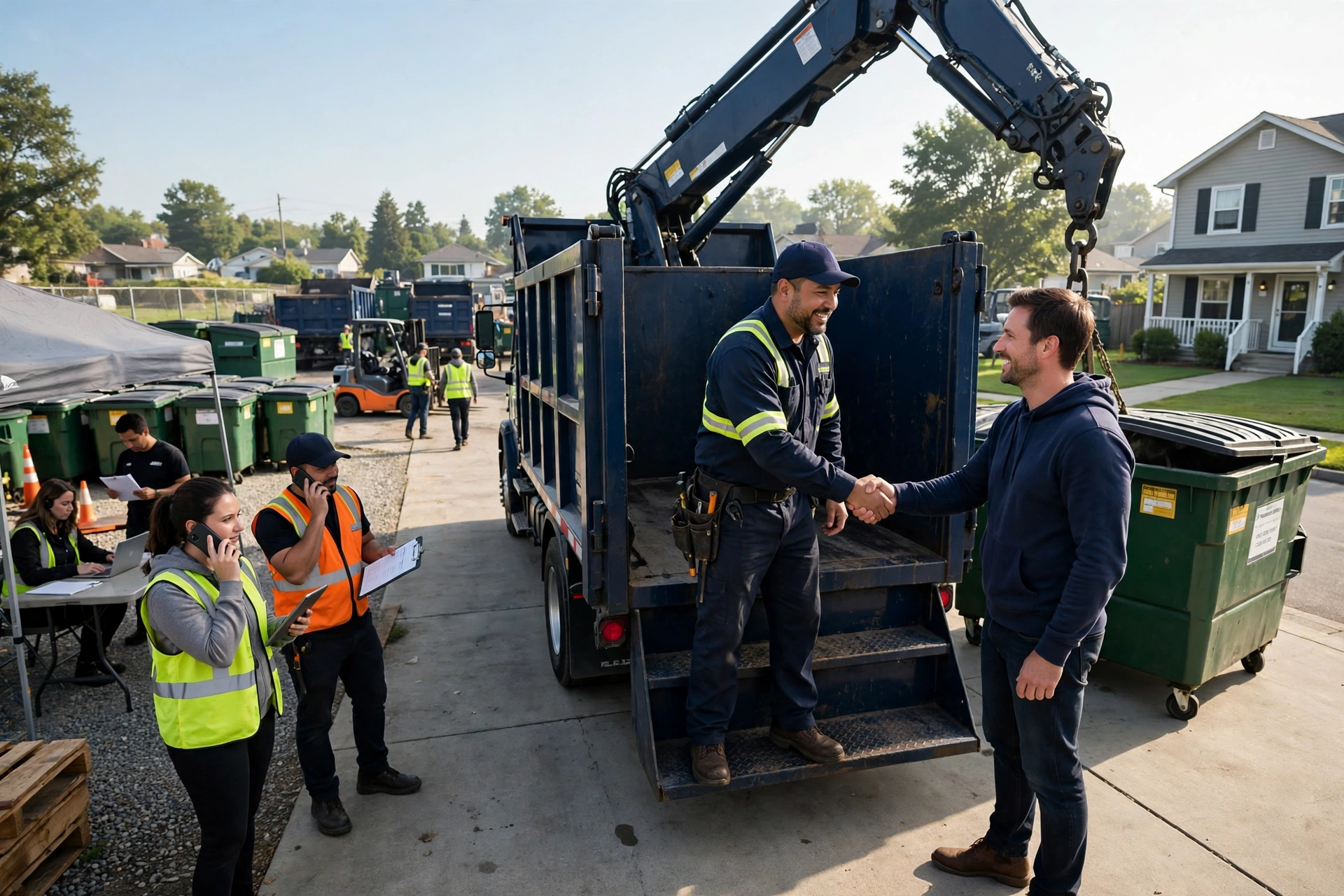
Content helps local SEO only when it answers questions your customers actually ask. Generic blog posts about waste management in general will not rank for local, high-intent searches, and they will not generate calls. Instead, write content around the decisions your customers make. What size dumpster do I need for a kitchen remodel? What can I put in a dumpster, and what is prohibited? How long can I keep a dumpster? Do I need a permit to place a dumpster on the street? How much does a dumpster rental cost in my town? Each of those questions deserves a clear, direct answer, with a link to the relevant service or town page. Use headings that match the question, answer it in the first paragraph, and then expand with detail. That structure helps both readers and search engines, including AI search tools that look for direct, well-structured answers. It also builds trust: a company that answers honestly, including about limits and prohibited items, is more credible than one that only talks about how great its service is. Do not publish content just to publish. One excellent, specific post that answers a real local question is worth more than ten generic posts that could apply to any company in any town.
Step 8: Track Calls, Not Just Rankings
Rankings are a means, not an end. A number one ranking that does not produce calls is not a success. A third-place ranking that consistently produces booked jobs is. Track the metrics that matter for a dumpster rental business: calls from your Google Business Profile, calls from your website, quote form submissions, booked rentals, and the towns those bookings come from. If you can, track which pages and which searches led to those bookings. That data tells you where to invest next. Review your rankings regularly, but review them by town and by service, not just nationally. Ranking first in your home town and tenth in a neighbouring town tells you where to focus your next town page, your next review push, or your next set of photos and posts. Ranking data without a town breakdown is too vague to act on. Be patient, but not passive. Local SEO for dumpster rental is not instant. Profile improvements and review growth can produce movement relatively quickly, while new pages and authority take longer to build. The companies that win are the ones that keep publishing specific, accurate, helpful local content and keep asking for reviews, month after month, while competitors stop after the first few weeks.
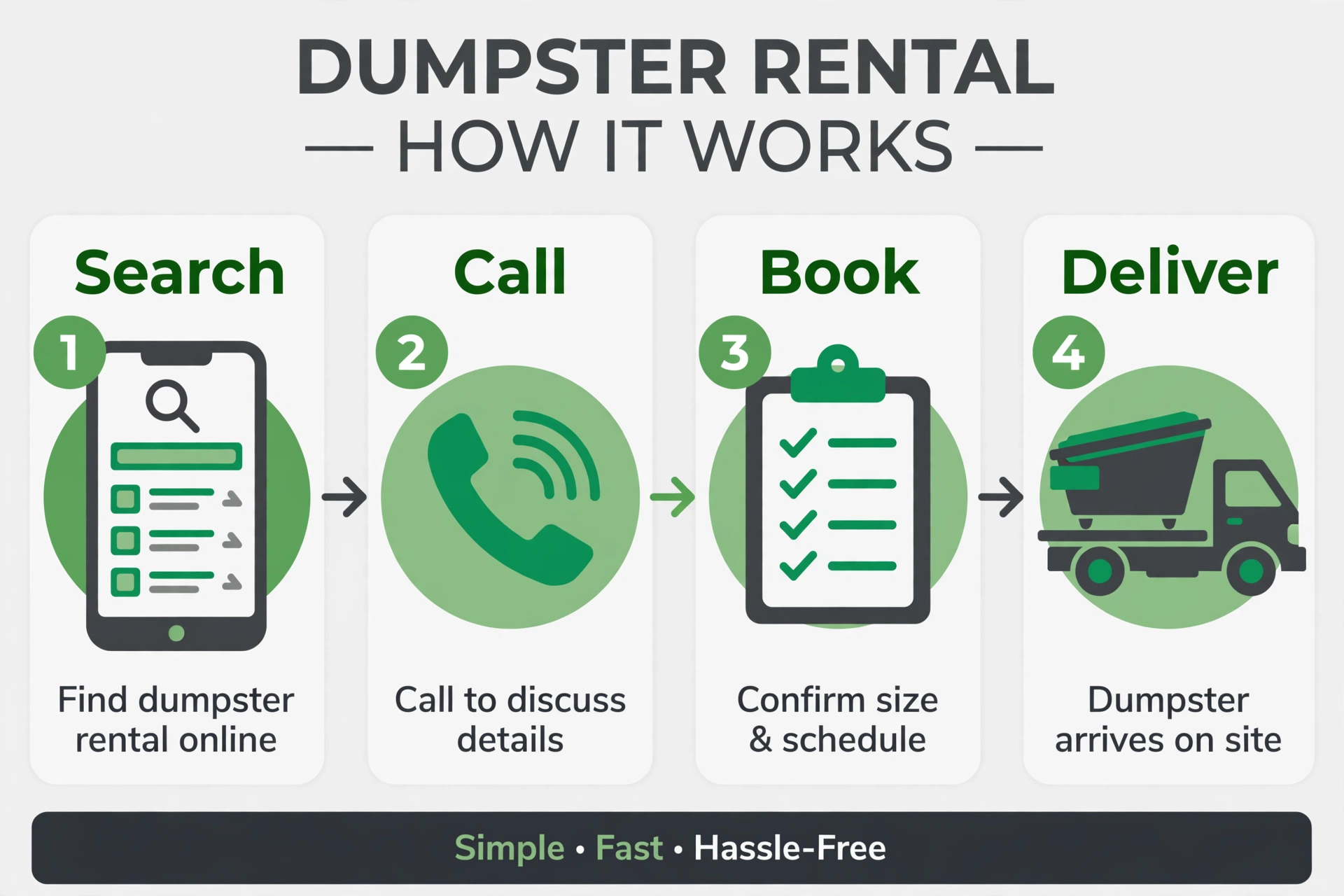
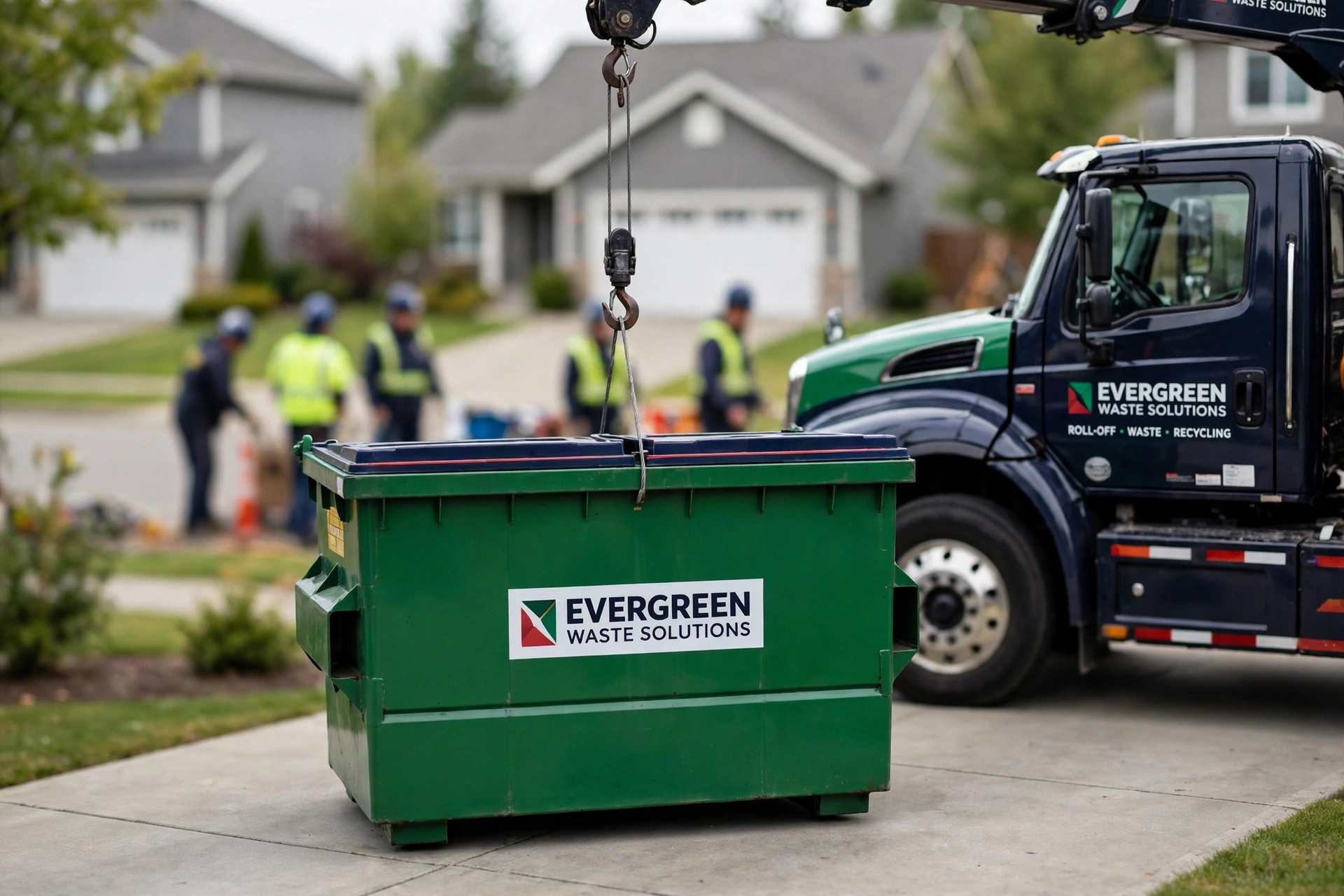
Common Mistakes That Keep Dumpster Companies From Ranking First
First, targeting too many towns with thin pages. Focus beats breadth in local SEO. Second, neglecting the Google Business Profile after setting it up once. An inactive profile loses to an active one, even if the inactive business is better in real life. Third, writing for Google instead of for customers. Keyword-stuffed pages that repeat a town name in every sentence do not convert, and they do not build trust. Write naturally, use the town and service names where they belong, and let relevance come from real specificity. Fourth, hiding prices or making booking difficult. Customers who cannot get a clear next step will call the competitor whose site makes it easy. Fifth, ignoring reviews, especially negative ones. Unanswered negative reviews do more damage than the original complaint, because every future customer reads them. Avoid those five mistakes, and you are already ahead of most local competitors. Most dumpster rental companies do not have a local SEO system at all. They have a website, a profile they set up years ago, and a hope that customers will find them. A system — profile, service pages, town pages, reviews, and conversion-focused pages — beats hope every time.
Related guides
Google Business Profile for home services how to get Google reviews local services ads vs organic seo ai search seo seo audit home services
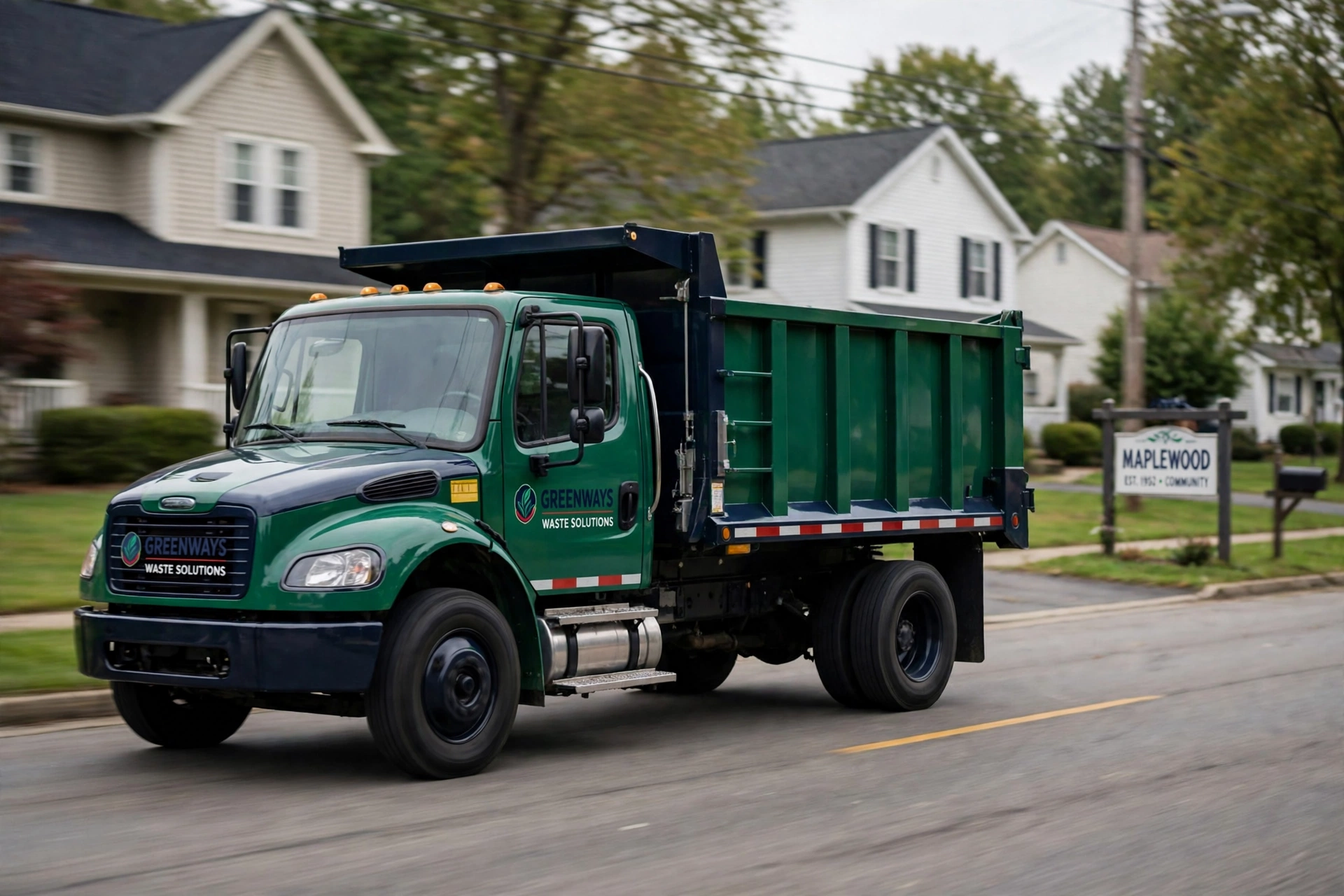
Frequently Asked Questions
How long does it take to rank for “dumpster rental near me”? It depends on your market, your starting point, and how consistently you work on it. Profile and review improvements can show movement sooner, while new pages and authority take longer to build. The right expectation is steady progress over months, with early wins in your home town and nearby suburbs, rather than an overnight jump to first place everywhere. Do I need a separate page for every town I serve? You need a separate page for every town you want to rank for, but only if you can make that page genuinely specific and useful. A thin, copied page will not help you. Start with your core towns, make those pages excellent, and expand only when you can maintain that standard. Is paid advertising a replacement for local SEO? Paid ads can generate calls quickly, but you pay for every click and every lead, and the calls stop when the budget stops. Local SEO builds an asset — rankings, reviews, and pages — that continues to generate calls after the work is done. Most successful dumpster companies use both, with SEO as the long-term foundation and ads as a supplement, not a substitute. Should I target my whole state or just my town? Target your real service area. A state-wide target is too broad for a local business, and it dilutes your relevance for the towns where you actually deliver. Start local, prove you can win there, and expand your service area only when your operations can support it. What is the single most important factor for “near me” rankings? There is no single factor. Relevance, distance, and prominence all matter. If you must prioritise one thing first, make your Google Business Profile complete, accurate, and active, and start a consistent review system. Those two actions improve both prominence and trust, and they support every other part of the playbook.
What to Do Next
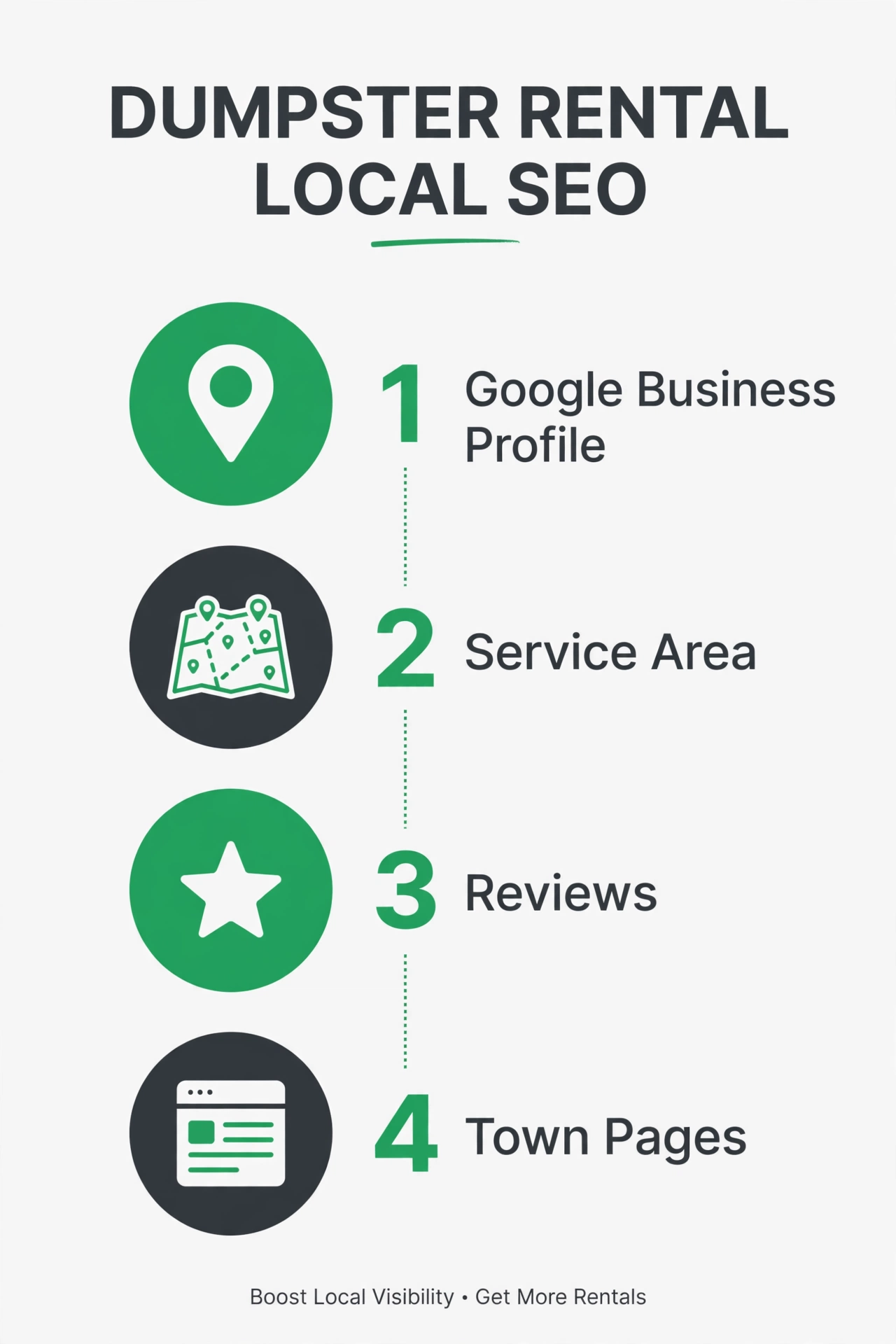
Start with an audit, not a guess. Check your Google Business Profile for completeness and activity, look at your town and service pages for thin or duplicate content, and check how many recent reviews you have. That audit will show you which step in this playbook will move you fastest. Then follow the playbook in order: profile, service area, service pages, town pages, reviews, conversion, content, and tracking. Do not try to do everything at once. Fix the foundations first, then build the pages that will rank, then build the proof that will convert. If you would like help applying this playbook to your market, request your free audit. We will review your profile, your pages, and your reviews, and show you exactly what to fix first — with no obligation.