How AI Search Works in 2026
Learn AI search SEO for Google AI Overviews, ChatGPT, and Perplexity, so AI answers quote your business first. Get a free audit.
By Digital Rank Solutions Team · Published Oct 4, 2026 · Updated Nov 4, 2026 · 13 min read
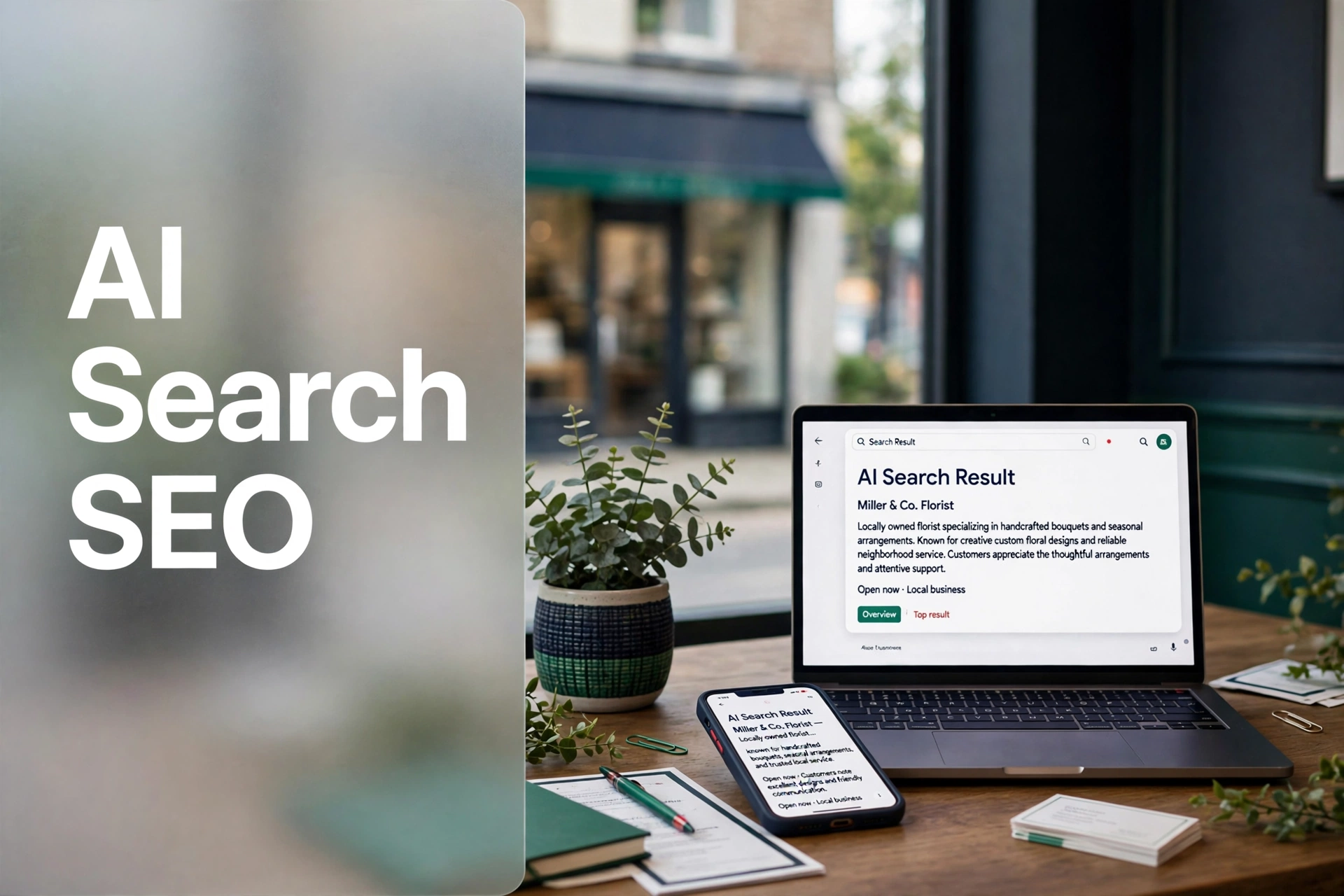
If you want to get quoted by Google AI Overviews, ChatGPT, and Perplexity in 2026, here is the direct answer: publish clear, specific, trustworthy pages that answer one question completely, with a direct answer at the top, supporting detail underneath, and proof that your business is real and local in the USA. AI search tools do not quote the loudest website. They quote the clearest one. That is the core shift behind ai search seo. Traditional search gave people a list of links to explore. AI search gives people an answer first, often with a short list of sources underneath. If your page is vague or hard to scan, the AI system will skip it and quote a competitor whose page is easier to understand. Small businesses in the USA can win here, because AI tools reward direct, useful answers.
What AI Search Actually Is
AI search is what happens when a search engine or chatbot uses artificial intelligence to read many pages, summarize them, and present a single answer. Instead of only showing links, the tool writes a response, often in paragraphs or bullet points, and links to the sources it used. In traditional search, Google was a librarian who pointed you to the right shelf. In AI search, Google, ChatGPT, and Perplexity act more like an assistant who has already read the books and tells you what they say, with footnotes. That changes what it means to rank. Ranking used to mean appearing high on a results page. Now it also means being selected as a source for the answer itself. The terms for this work are GEO and AEO. GEO means optimizing so generative AI tools will cite you. AEO means optimizing so answer engines will choose your content as the answer. Both share the same goal: be the clearest, most trustworthy answer to a real question.
Why AI Search Changes SEO in 2026
AI search does not replace traditional SEO. It builds on it. The basics still matter: a fast, mobile-friendly website, clear titles, helpful headings, and pages that match what people actually search for. What has changed is how much weight is placed on clarity, directness, and trust. Two facts explain why this shift deserves attention. First, 68.01% of US Google searches Jan-Apr 2026 ended with no click. That means a large share of searches now end on the results page itself, because the searcher got what they needed from a summary, an AI Overview, a map, or another on-page feature, without clicking through. Second, AI Overviews appear on more than 20% of searches and cut clicks to listed results by nearly 60% when present. When an AI Overview shows up, far fewer people click the listings below it. Those facts do not mean SEO is dead. They mean the goal has widened. You still want to rank in traditional results, but you also want to be the source inside the AI answer. When you are quoted, you stay visible even in a no-click world. You do not need to outspend a national brand to be quoted. You need to answer a specific question better than anyone else, with a focused local page that explains the service clearly.
How Google AI Overviews Choose What to Quote
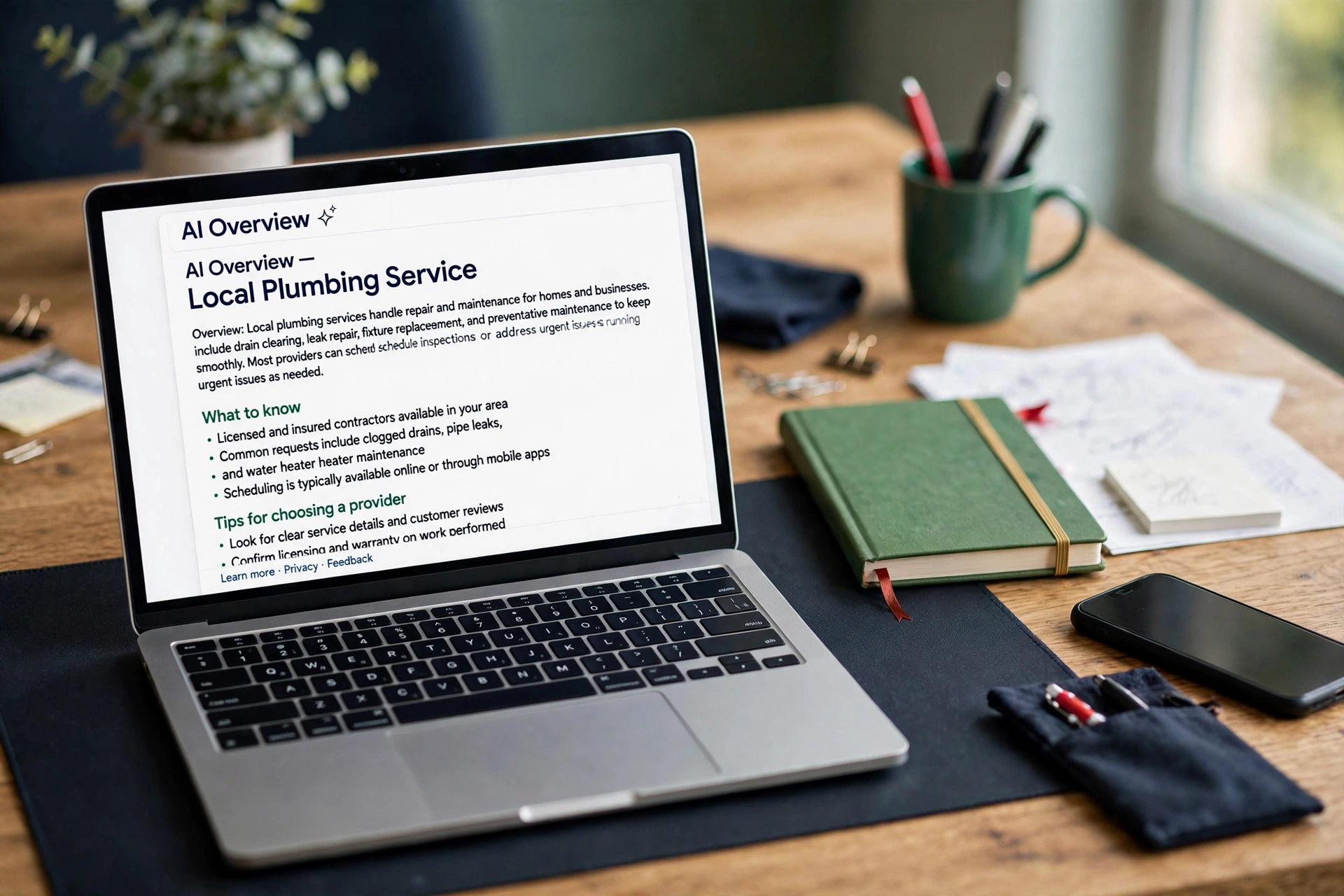
Google AI Overviews are AI-generated summaries that appear at the top of some Google search results. They pull from multiple pages, summarize the key points, and link to sources. Google tends to quote pages that answer the question directly and early, are structured for easy reading, and show expertise and trust. A page that starts with a clear, concise answer is easier for an AI system to use than a page that takes several paragraphs to get to the point. Clear headings, short paragraphs, and a logical order also help people and AI systems understand the page. Trust matters too: specific detail, accurate information, and consistent contact information signal that a real person would trust the page. To improve your chances with google ai overviews seo, put the direct answer in the first paragraph, then expand with detail. Use a heading that mirrors the question people ask. Keep sentences short, define terms in plain language, and keep each page focused on one main question or service. A page that tries to answer everything at once is harder to quote for a specific query.
How ChatGPT Chooses What to Quote and Recommend
ChatGPT works differently from Google, but the principle is similar. When ChatGPT answers a question, it draws on its training and, in many cases, on live web search to find current information. When it recommends businesses or cites sources, it favors content that is clear, specific, and credible. ChatGPT seo is less about gaming a ranking algorithm and more about being easy to summarize and safe to recommend. ChatGPT prefers pages that explain what a service is, who it is for, what the process looks like, and what makes a provider a good choice, without hype or vague promises. For local services, it often answers with a short explanation followed by practical advice on how to choose a provider. Your content should help it do that job by answering the questions customers ask before they book: what is included, what is not included, how scheduling works, what to prepare, and what questions to ask any provider. Do not invent guarantees you cannot stand behind. General, honest guidance is more quotable than exaggerated claims. ChatGPT also values consistency. If your website, listings, and reviews all describe the same services and service area, the picture is coherent and trustworthy. Write as you would speak to a customer in person: answer in two or three sentences first. That short answer is what AI tools love to quote. Put it at the top of the section, then support it with detail below.
How Perplexity Chooses What to Cite
Perplexity is built around citations. When you ask Perplexity a question, it searches the web, reads sources, and writes an answer with links to the pages it used. Every claim is typically tied to a source, which makes it one of the most citation-friendly AI tools for businesses. Perplexity seo therefore rewards pages that make facts easy to find and verify. Use clear headings that state the topic of each section. Put key facts in the body text, not only in images that text-based systems cannot easily read. If you include a list, make it a real text list. If you mention a process, describe the steps in order. Perplexity also favors fresh, specific, and well-organized content. A page written for a real audience and organized around real questions is more likely to be cited than a thin page with little substance. Depth matters only when it is useful. Focused content that covers a topic from start to finish, with distinct sections for each subtopic, beats long content that repeats the same point. For a local business, authority does not mean being famous nationally. It means being clearly focused on that service and area, with detailed pages for each service and a website that is easy to navigate. Clear navigation and natural internal links help AI systems understand which pages matter most.
GEO and AEO in Plain English
You will see the terms geo aeo used together, and they can sound technical. In practice, they are simple. GEO, or generative engine optimization, is the work of making your content easy for generative AI tools to find, understand, and quote. That includes direct answers, clear structure, helpful detail, and trust signals across your website. AEO, or answer engine optimization, focuses on systems that give direct answers, rather than only lists of links. That includes featured snippets, voice answers, AI Overviews, and chatbot responses. For a small business, GEO and AEO overlap almost completely. Both come down to the same habits: answer real questions directly, structure content clearly, be specific and honest, and make it easy to verify what you say. You do not need separate strategies. You need one people-first strategy, done well. Read your page aloud: if it sounds like a helpful expert explaining something to a neighbor, it is likely ready for AI search.
The AI Search Playbook: Steps That Actually Help You Get Quoted
Work through these steps one page at a time, starting with your most important service page. Step 1: Pick One Question Per Page Focus each page on one question or one service, instead of trying to cover everything. A page about garage door spring repair should answer questions about spring repair, not list every garage door service at once. A page about junk removal in one town should focus on that town, not every town you serve. Clear focus makes it easier for an AI system to know when your page is the right source. Step 2: Lead With the Direct Answer Put the direct answer at the top of the page and at the top of each major section. Do not bury it after a long introduction. Answer first, then explain. That structure helps both readers and AI systems find what they need fast, and it makes your content more quotable. Step 3: Structure With Clear Headings and Short Sections Use headings that match the questions people actually ask. Keep paragraphs short, use bullet points where helpful, and break long topics into clear sections. Structure is not just design. It is a signal that helps AI systems understand, compare, and quote your content accurately. Step 4: Be Specific Instead of Generic Generic advice is easy to ignore and hard to quote. Be concrete about what you do, how the process works, and which areas you serve in the USA. Explain differences, timelines, and considerations in plain terms. Do not invent numbers or promises. Specific, honest detail builds trust and gives AI systems something useful to cite. Step 5: Prove You Are Real and Local AI systems look for evidence that your business is real, local, and trusted. Your service area, your services, your contact details, and consistent listings all matter. So do reviews, because they show that real customers have used your service. Our guide on Social Media + SEO: How Reels and Reviews Work Together to Rank Your Business explains how reviews and visibility work together to build that trust. Step 6: Cover the Follow-Up Questions Think about the next question a reader will ask, and answer it on the same page or in a clear FAQ. If a customer asks about cost, timing, process, and preparation, answer each one directly. Short, clear answers are easier to quote than long, vague paragraphs. For a deeper look at how to split content between pages and posts, see our guide on Service Pages vs. Blog Posts: When to Publish Each One for Local SEO. Step 7: Keep Pages Fresh, Accurate, and Easy to Load Review your pages regularly. Fix broken links, update prices or service details when they change, and remove information that is no longer true. Make sure pages load quickly and work well on mobile, because slow or broken pages hurt both traditional rankings and AI visibility. Our guide on Technical SEO for Local Businesses: Speed, Mobile, and Core Web Vitals in Plain English covers speed and mobile in plain terms.
What to Publish to Get Cited More Often
Start with strong service pages. A service page is the foundation, because it answers the main question about one service in one area, with enough detail to be trusted. How-to and explainer articles are the supporting strength. They answer follow-up questions, explain processes, and give AI systems more reasons to see you as an authority on the topic. Comparison guides and local guides also work well, because they help people choose between options or understand a local market. A dedicated page like SEO for junk removal businesses shows how a service page can combine local detail, process, and proof in one place. Across all formats, publish fewer, better pages rather than many thin pages.
What NOT to Do for AI Search SEO
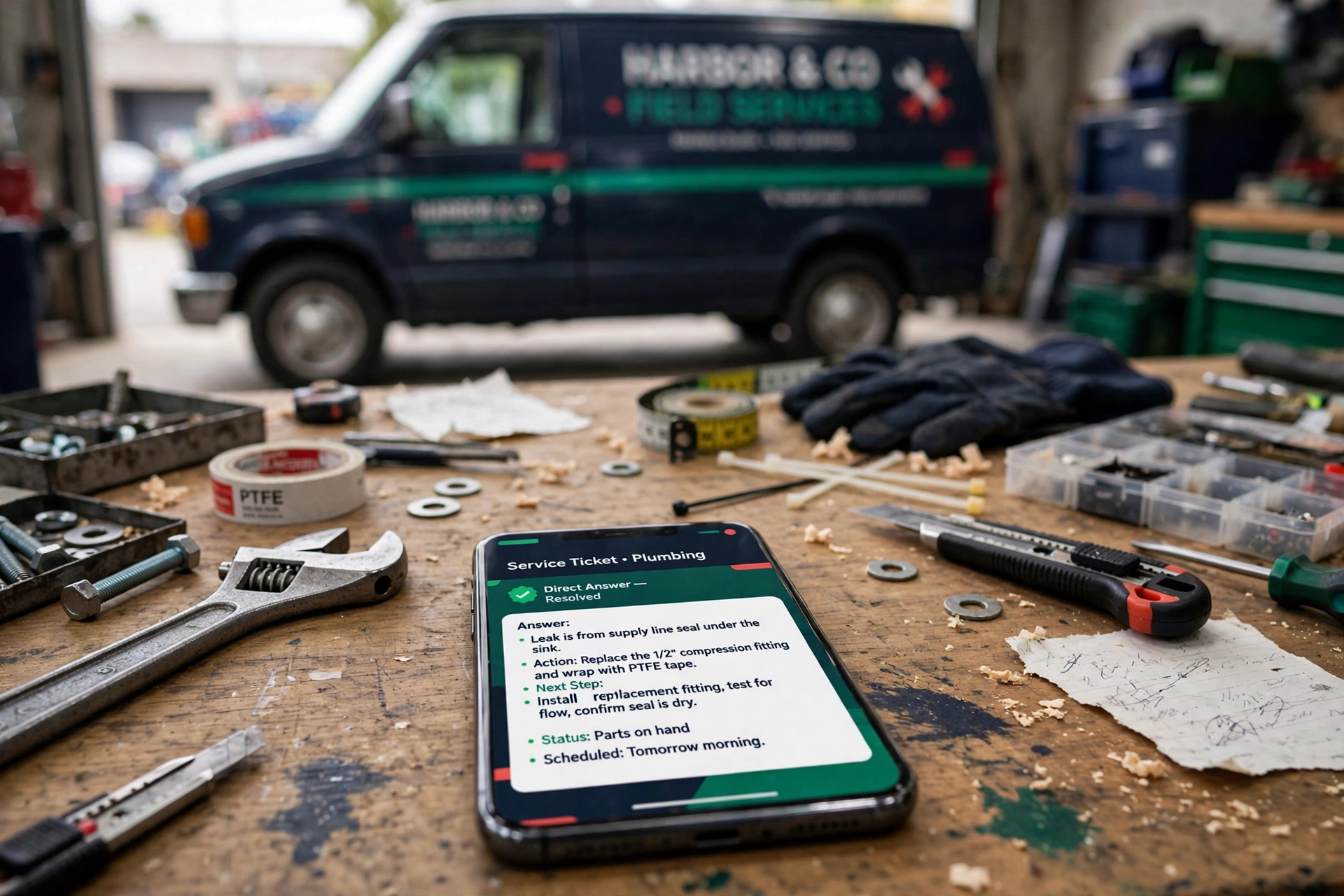
Do not copy content from other sites, and do not stuff keywords into every sentence. AI systems are built to spot low-quality, repetitive, or misleading content, and copying or stuffing will hurt you more than it helps. Do not make claims you cannot support, and do not promise results you cannot guarantee. Do not hide key information in images alone, because AI systems read text more reliably than images. Do not create pages for places or services you do not actually serve, because that creates a poor experience when customers call. And do not expect overnight results. AI visibility builds as your pages, listings, and reviews build trust over time.
How to Measure AI Visibility Without Chasing Vanity Metrics
Track three things, and keep it simple. First, track traditional search performance: rankings, Map Pack visibility, website visits, and calls from search. If those are improving, your foundation is working. Second, test AI tools yourself. Ask Google, ChatGPT, and Perplexity the questions your customers ask, and note whether your business appears, whether the answer is accurate, and which pages are cited. Do this regularly, but do not obsess over one result on one day, because AI answers change. Third, track inquiries and their source. Ask new customers how they found you, and record whether they mention an AI tool, a search result, or a review. Over time, you will see patterns: which pages bring calls, which topics get cited, and which questions need better answers. The goal is to become a trusted source that AI tools return to again and again.

Frequently Asked Questions About AI Search SEO
What is ai search seo? AI search SEO is the practice of making your pages easy for AI tools like Google AI Overviews, ChatGPT, and Perplexity to find, understand, and quote. It builds on traditional SEO, with a stronger focus on direct answers, clear structure, and trust. Does AI search replace Google SEO? No. AI search builds on the same foundation: a strong profile, clear service pages, reviews, and helpful content. If you stop doing traditional SEO, AI visibility will usually fall too, because AI tools rely on the same signals of relevance and trust. How do I get quoted by Google AI Overviews? Start with a clear, direct answer at the top of the page, use headings that match real questions, and back up your answer with specific, helpful detail. Keep the page accurate, easy to load, and supported by a strong profile and reviews. How is chatgpt seo different from traditional SEO? ChatGPT SEO focuses more on being recommended in a conversational answer, rather than only ranking in a list of links. That means clear explanations, process detail, and consistency across your website, listings, and reviews matter even more, because ChatGPT weighs trust and clarity when it chooses what to recommend. How is perplexity seo different? Perplexity is built around citations, so it favors pages that are clear, specific, and easy to cite. Use headings that state the topic, put key facts in the body text, and link naturally to related pages so Perplexity can follow your structure. What do GEO and AEO mean for a small business? GEO and AEO are terms for making content easy for generative and answer engines to use. For a small business, they mean the same practical habits: direct answers, clear structure, specific detail, and proof that you are real and local. How long does it take to get cited by AI tools? It depends on your starting point, your market, and how consistent your content and reviews are. Some pages may be cited quickly, while others take weeks or months to build enough trust. Focus on steady improvement, not a single quick fix. Should I still publish blog posts if AI answers questions directly? Yes. Blog posts help AI tools understand your expertise and give them more to quote, especially for follow-up questions. The key is to publish fewer, better posts that answer real questions, and to keep your service pages as the foundation. For more on when to use each format, see our guide on Service Pages vs. Blog Posts: When to Publish Each One for Local SEO.
Get Help Making Your Business Quotable in AI Search
AI search rewards clear, helpful explanation. If your pages are vague, outdated, or hard to navigate, AI tools will skip them and quote someone else instead. If your pages answer real questions directly, with specific detail and proof that you are real and local, you have a real chance to be cited. Digital Rank Solutions helps USA small businesses build SEO and content that works for both traditional search and AI search, without hype or shortcuts. If you want your pages to be clearer and more quotable, start with a conversation.
Ready to grow?
to talk about making your business visible in Google AI Overviews, ChatGPT, and Perplexity.
Contact Digital Rank Solutions