Garage Door Repair SEO for Emergency Calls
Garage door repair SEO that brings emergency calls first, with Map Pack, reviews, and pages for springs, openers, and cables.
By Digital Rank Solutions Team · Published Oct 26, 2026 · Updated Nov 4, 2026 · 12 min read
The direct answer
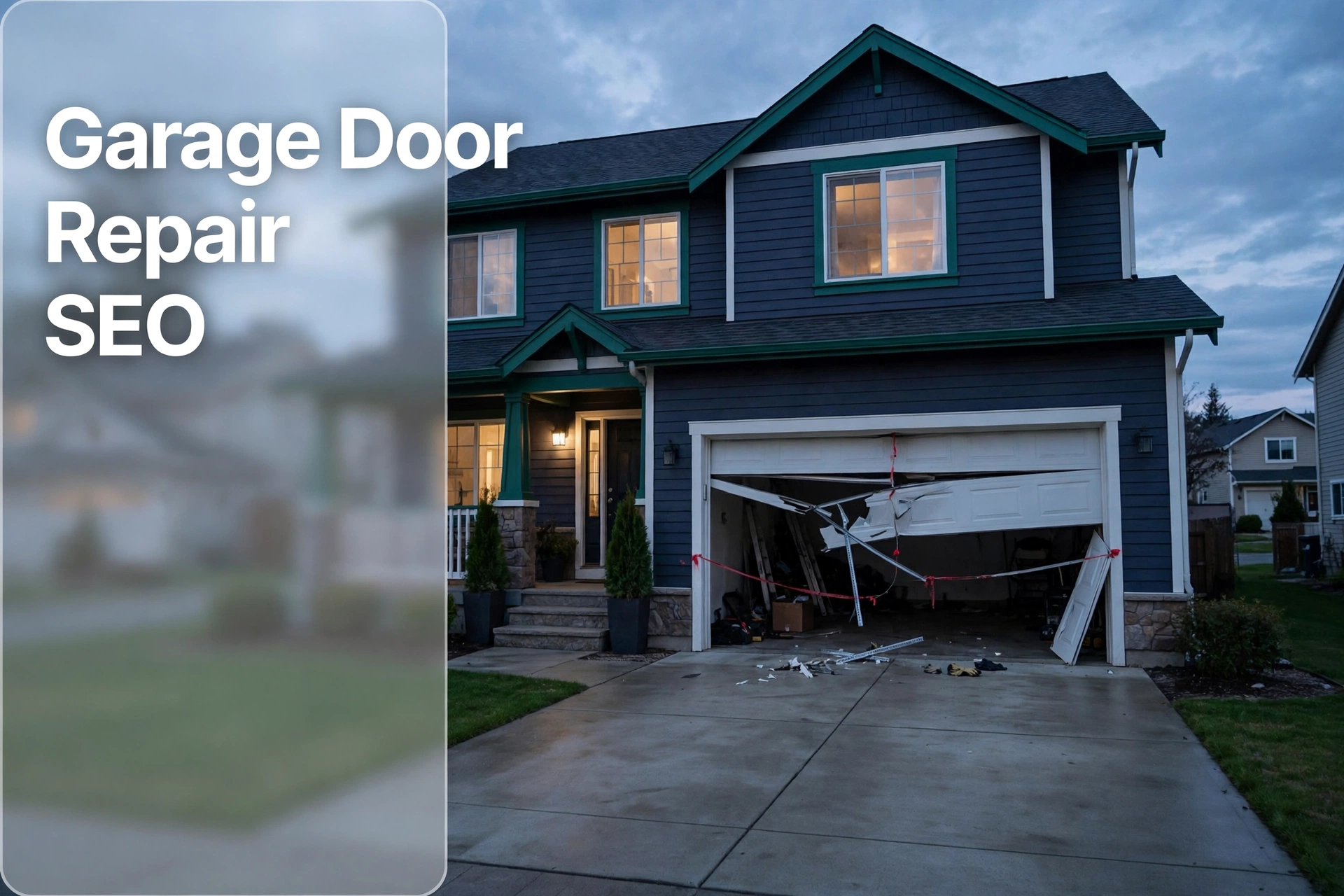
Garage door repair SEO works when a customer with a broken door finds you first, trusts you in seconds, and can call you in one tap. That means three things have to be true at the same time: your Google Business Profile is complete and active, your website has a clear page for the exact repair the customer needs, and your reviews prove you show up fast and fix the problem. If any one of those is missing, the call goes to a competitor, even if your work is better. This is not a branding exercise. A garage door customer is not browsing for inspiration. Their car is trapped, their door is stuck open, or a spring has snapped. They search, they scan the top results, and they call. The companies that win emergency calls are the ones that make that decision easy. For the full service behind this guide, see garage door repair SEO.
How customers actually search
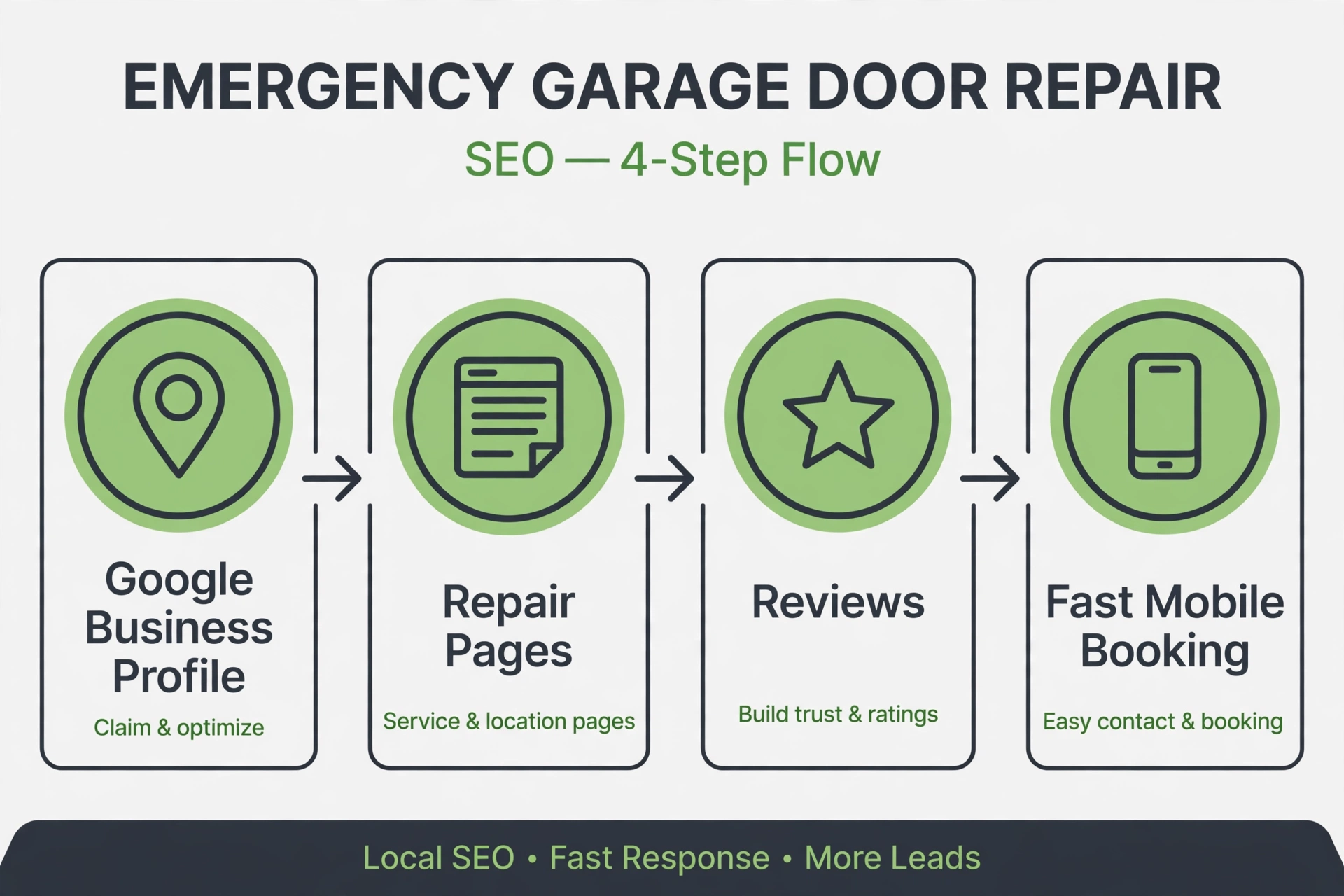
Customers rarely search for a company name first. They search for the problem. That is why part-level and problem-level searches matter more than generic trade terms in garage door repair SEO. Real search data makes the point clearly. In the United States, “garage door opener repair” draws about 201,000 searches per month, “garage door repair near me” draws about 165,000 searches per month, and “garage door company near me” draws about 33,100 searches per month. The lesson is simple: people search for the broken part and for help near them, not for a company brand they do not know yet. Your content should follow that pattern. Build pages for opener repair, spring repair, cable repair, off-track doors, and panel replacement, not just one generic “services” page. Each page should answer the customer's immediate question: what is wrong, can it be fixed today, how long will it take, and how do I book you. Local intent also changes the format. Most emergency searches happen on a phone, often from the driveway. Your phone number must be visible without scrolling, your service area must be clear, and your page must load fast. If a customer has to hunt for a contact button, you have already lost the call.
Step 1: Fix your Google Business Profile first
Your Google Business Profile is often the first thing a customer sees, and for “garage door repair near me” searches, it may be the only thing they look at before calling. Treat it as your most important landing page. Start with the basics and get them exactly right. Your business name, address, phone number, website, and hours must match everywhere else online. Choose the most accurate primary category and add relevant secondary categories for repair and installation. List every service you actually offer, including spring replacement, opener repair, cable replacement, roller replacement, and off-track repair. Then keep the profile active. Add photos of real jobs, real trucks, and real technicians, not stock images. Post updates regularly, even short ones about same-day availability or seasonal maintenance. Answer questions in the Questions and Answers section before customers have to ask them. A profile that looks maintained signals a company that is still in business and still answering the phone. Reviews belong here too, and we will return to them in detail below. For now, remember this: a complete profile with recent reviews will beat a thin profile every time, even if the thin profile's website is prettier.
Step 2: Build one page per repair, not one page for everything
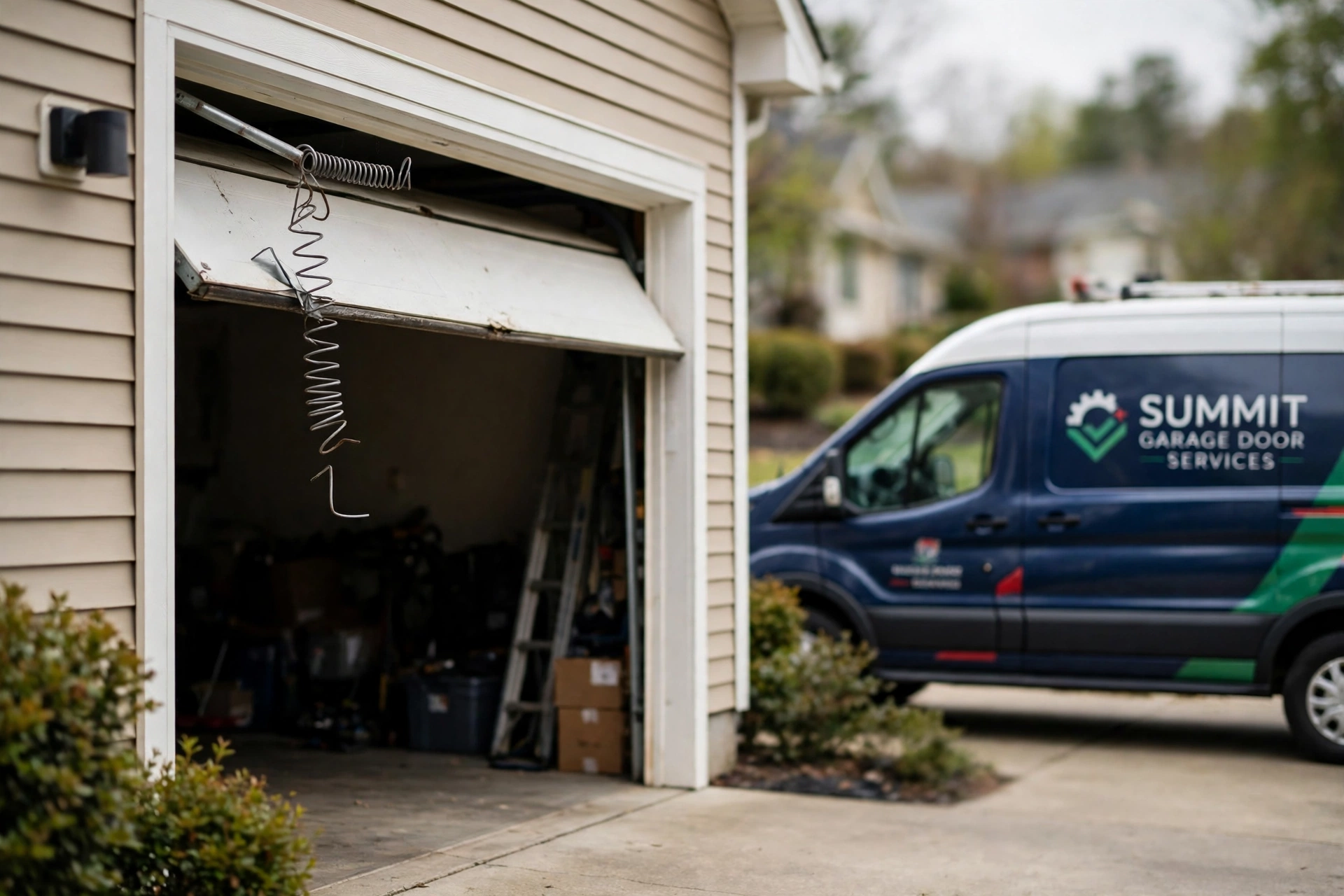
A single “garage door repair” page cannot rank well for every repair, and it cannot answer every customer's question well. Google matches specific searches to specific pages, and customers trust specific pages more. Create a separate page for each core service. A spring repair page should explain the signs of a broken spring, why a customer should not try to fix it themselves, what a typical visit involves, and how fast you can attend. An opener repair page should cover remotes, keypads, sensors, noisy openers, and opener replacement. A cable and roller page should explain fraying, wear, and safety risks. Each page needs the same conversion basics: a clear headline that matches the search, a short answer at the top, the service area, a call button, and a simple booking form. Do not bury the call to action at the bottom of a long essay. Emergency customers need it at the top and again after each section. Internal linking matters here as well. Your main garage door repair SEO service page should link to each repair page, and each repair page should link back to it. That structure helps Google understand what you do, and it helps a customer who lands on the wrong page find the right one in one click.
Step 3: Win reviews before you need them
Reviews are not a nice extra in this industry. They are the trust signal that decides the call when two companies look similar in search results. A customer with a stuck door will choose the company with recent, local, five-star reviews over a company with no reviews, even if the second company is closer. Build a review system, not a one-off request. Ask every satisfied customer for a review, ideally on the same day as the job, while the relief is still fresh. Make it easy with a direct link sent by text or email. Do not ask only happy customers in a way that filters out honest feedback, but do make the process simple for everyone you serve. Respond to reviews, including the difficult ones. A calm, helpful reply to a negative review tells future customers more about you than a perfect rating alone. Thank reviewers by name where appropriate, mention the service you provided, and keep the tone professional. Review velocity matters as much as total count. Ten reviews from last month are more persuasive than fifty reviews from three years ago. A steady flow of new reviews tells Google your business is active, and it tells customers you are still doing good work right now.
Step 4: Make your site fast and easy to use on a phone
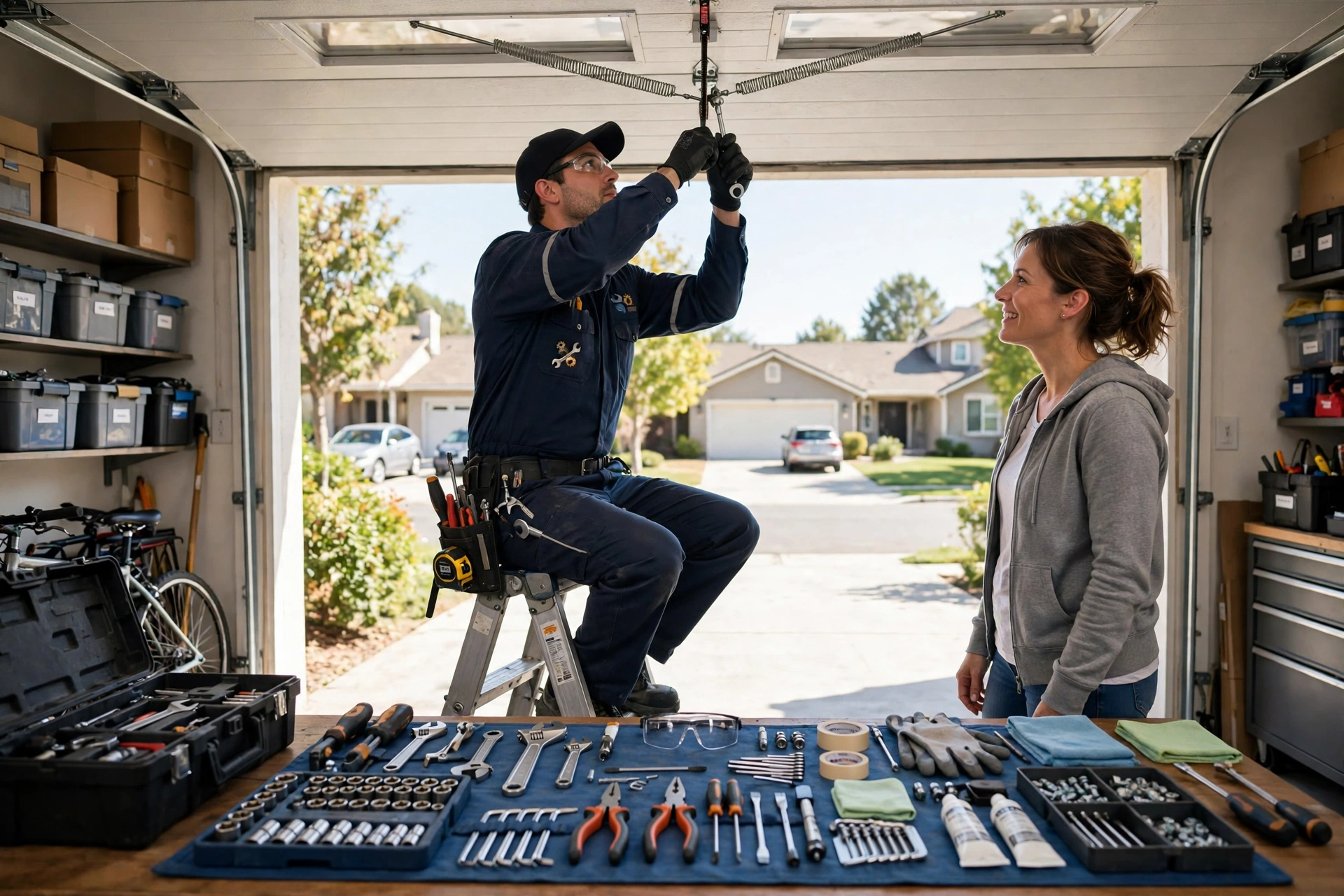
Emergency customers will not wait for a slow site. They will go back to search results and call the next company. That means speed, clarity, and a visible phone number matter more than design polish. Check your site on a real phone, not just on a desktop. Can a customer see your phone number immediately? Can they tap to call without scrolling or searching? Is the next step obvious — call now, or request a same-day visit — or is it buried under a long menu? Fix the obvious friction first. Compress images, remove unnecessary pop-ups, and keep the navigation simple. A customer with a stuck door does not need a gallery, a blog archive, or a long company history. They need a phone number, a service area, and a reason to trust you in seconds. If you want a deeper look at how emergency intent changes behaviour, read Emergency Garage Door Repair: Why “Near Me” Searches Convert in Minutes, Not Days at emergency garage door repair. It explains why these searches behave differently from planned repair searches, and how to structure your pages and profile to win them.
Step 5: Write content that answers the real question
Many garage door websites fail because they write about themselves instead of about the customer's problem. Flip that. Every page and post should start with the customer's question and answer it directly. Good topics include: what to do when a spring breaks, why a door will not close, what a grinding noise means, and whether a repair is safe to attempt at home. Those are the searches that bring real customers, not just traffic. Safety matters in this content. Never encourage a customer to adjust a torsion spring or a high-tension cable themselves. Be clear about when to call a professional, and explain what the visit will involve. That honesty builds trust, and it also protects the customer. This approach also helps with AI search. Google AI Overviews, ChatGPT, Gemini, and Perplexity all prefer pages that answer a specific question clearly, with headings, steps, and a direct answer near the top. If your page buries the answer, an AI system is unlikely to quote it. For the highest-value repair topic, see Garage Door Spring Repair SEO: How to Rank for High-Intent, High-Ticket Searches at garage door spring repair SEO.
Step 6: Track calls, not just rankings
Rankings alone do not pay bills. Calls, booked jobs, and completed repairs do. If you only track positions, you can climb in search and still lose money, because you are ranking for the wrong terms or your site does not convert. Set up call tracking for your website and your Google Business Profile, and record where each call came from. Track which pages generate calls, which service areas generate the most jobs, and which keywords lead to booked work rather than just clicks. Over time, that data tells you where to invest next. A simple monthly review is enough to start. Look at calls by service, calls by area, and the ratio of calls to booked jobs. If spring repair pages generate many calls but few bookings, check your pricing guidance, your availability message, and your response time. If opener pages convert well, consider expanding that content with replacement and smart opener topics, covered in Garage Door Opener Repair: How to Turn a $150 Job Into a Repeat Customer at garage door opener repair. Do not chase every keyword. Chase the keywords that produce booked jobs at a cost you can afford. That discipline is what separates a profitable garage door repair SEO campaign from an expensive reporting exercise.
Common mistakes that lose emergency calls
The first mistake is targeting only the company name or a broad city term, while ignoring the repair terms customers actually type. Add those repair pages before you spend more on broad content. The second mistake is a Google Business Profile that is incomplete, outdated, or inactive. No photos, no posts, and no recent reviews make a company look closed, even when it is not. The third mistake is a slow, cluttered website with a hidden phone number. Test it on your own phone. If you cannot call yourself in under ten seconds, fix that before anything else. The fourth mistake is thin, duplicated content across towns. One page per town can work, but only if each page has real local detail: the areas you serve, the types of homes and doors you see there, and genuine local proof. Copying the same page and swapping the town name will not rank well and will not convert well. The fifth mistake is ignoring follow-up. A customer who had a spring replaced today may need an opener replaced next year. Stay in touch with useful maintenance reminders, and make repeat booking easy.
A simple 90-day plan
In the first 30 days, fix your Google Business Profile, add a review request system, and make your phone number and booking form obvious on every page. Build or improve your top three repair pages: springs, openers, and off-track doors. In days 31 to 60, add the remaining repair pages, publish two or three problem-solving posts that answer real customer questions, and start collecting reviews consistently. Check your call data weekly and fix any page that gets traffic but no calls. In days 61 to 90, expand into your next service areas with real local pages, add FAQ schema where your platform supports it, and review which keywords are producing booked jobs. Double down on what works, and stop spending time on content that only produces impressions. This plan does not require a huge budget to start. It requires consistency. Most garage door competitors do the basics once and then stop. The company that keeps its profile active, keeps reviews flowing, and keeps answering real questions will pull ahead, town by town.
How to choose which towns to target first
Not every town is worth the same effort, and spreading yourself too thin is a common reason garage door companies fail to rank anywhere. Start with the towns closest to your base, where you can arrive quickly, and where you already have customers. Older housing is a useful signal. Towns with older homes tend to have older doors, springs, and openers, which means more repairs and more replacements. That does not mean you should ignore new suburbs, but older towns often give you faster wins. A practical way to choose is to look at your last year of jobs. Where did most calls come from? Where were your most profitable jobs? Where did you get reviews? Those answers are more reliable than any keyword tool. Location strategy also connects to the wider market. For a worked example of how older housing changes demand, see How to Rank in Pittsburgh and Cleveland for Garage Door Repair: Old Homes, Big Opportunity at garage door repair SEO Pittsburgh. Finally, keep your service area honest. Only target towns you will actually travel to, and say so clearly on your site and your profile. A customer who finds you for a town you will not serve is a wasted call, and a negative review waiting to happen.
Related guides
Google Business Profile for home services how to get Google reviews seo audit home services ai search seo local services ads vs organic seo
Frequently asked questions
How fast can garage door repair SEO bring emergency calls? It depends on your starting point. Profile improvements and review activity can improve visibility and calls relatively quickly, while organic rankings for competitive repair terms usually build over months. The fastest wins are almost always a complete profile, recent reviews, and a clear, fast, mobile-friendly site. Treat those as the foundation before expecting long-term ranking gains. Should I target “garage door repair near me” or my city name? Target both, but in different places. “Near me” searches are handled mainly through your Google Business Profile and Map Pack presence. City and repair combinations, such as spring repair in a specific city, are handled through dedicated service and area pages. You need both, because customers use both types of search. Is paid advertising a replacement for SEO? Paid ads can bring immediate calls, but they stop when you stop paying. Organic and Map Pack visibility keeps working after the initial work, and it often produces a lower cost per booked job over time. Most successful companies use paid ads for short-term coverage while building organic visibility for the long term. What is the biggest ranking factor for emergency garage door calls? There is no single factor. Relevance, distance, and prominence all matter in local search. Relevance means your profile and pages match the repair searched for. Distance means you genuinely serve that area. Prominence means reviews, citations, and overall reputation. Companies that improve all three, rather than chasing one trick, win consistently.
Get a free audit
If you want to know where you stand against the top garage door repair companies in your area, start with a free audit. We will review your Google Business Profile, your reviews, your repair pages, and your call conversion, and show you exactly what is costing you emergency calls and what to fix first.
Ready to grow?
we will show you the fastest wins for your market, with no obligation.
Request my audit