Service Pages vs Blog Posts for SEO
When to publish a service page and when to publish a blog post for local SEO, and how each one helps you rank. Get a free audit.
By Alex · Published Oct 27, 2026 · Updated Nov 21, 2026 · 7 min read
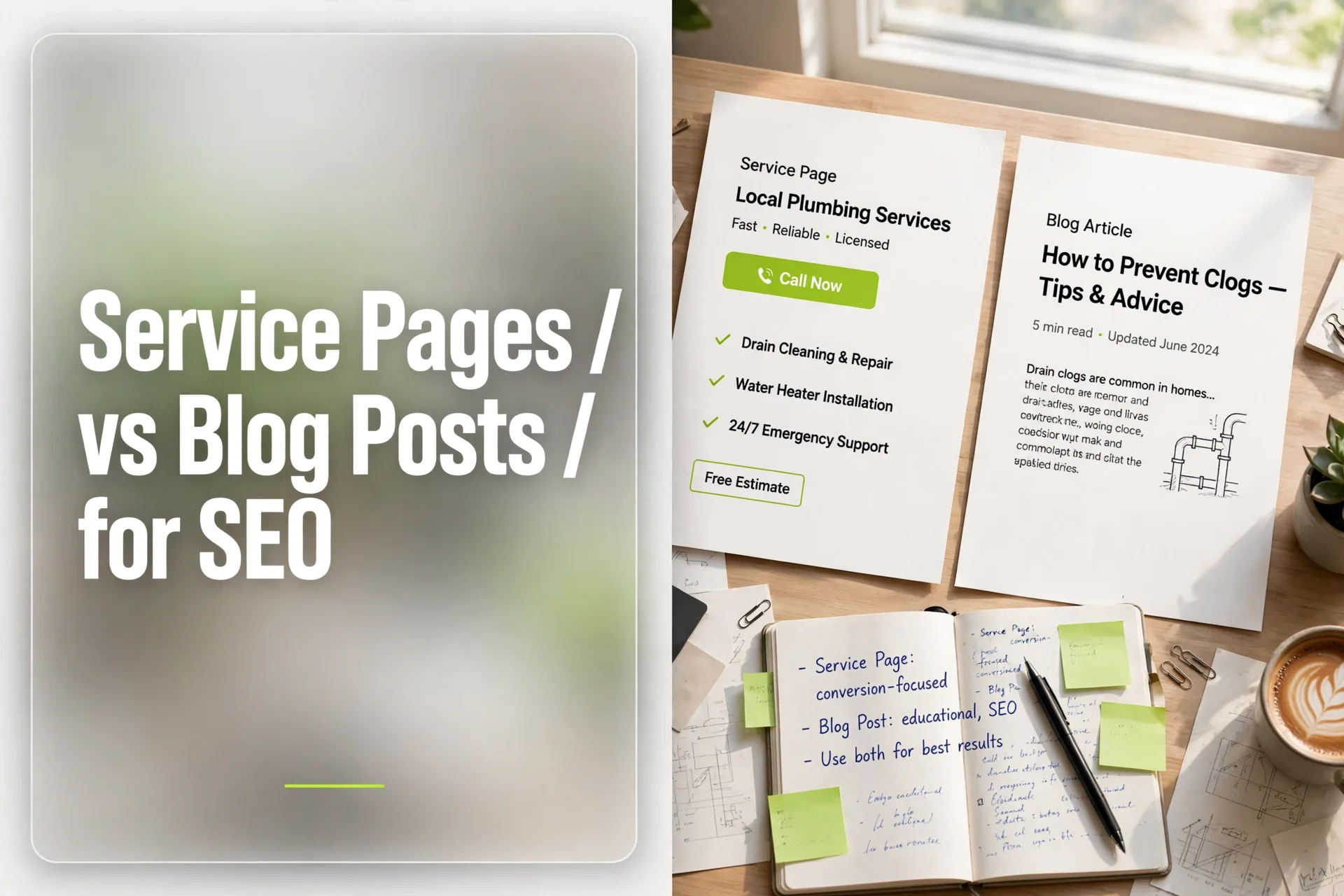
**Short answer:** Publish a service page when someone is ready to hire you. Publish a blog post when someone is still researching, comparing, or learning. Service pages sell a specific service in a specific place. Blog posts answer questions, build trust, and bring in people who are not ready to call yet. Local businesses need both, but they do very different jobs, and mixing them up confuses Google and loses customers. If your blog gets traffic but few calls, or your service page ranks but brings in few new customers, this is often the reason. You are using the wrong type of page for the job.
What Is a Service Page?
A service page is built around one service you offer, for the customers you want to serve. It is not a general overview of your company. It is focused, specific, and action-oriented. A junk removal company, for example, should have a dedicated page for junk removal and dedicated pages for other distinct services, with clear next steps on each one. That focus helps visitors and search engines understand exactly what the page is about. A strong service page answers these questions quickly: What service is this? Who is it for? What does it include, and what does it not include? Where do you offer it? Why should someone choose you? What should they do next?
The SEO Service Page Structure That Works
You do not need a complicated layout. You need a clear structure that a busy person can scan in seconds. Clear headline and opening Name the service and the place you serve, in plain language. Then open with what the service is, who it helps, and the problem it solves. Do not start with your company history. Start with the customer. What is included Use short sections or bullet points to explain what the service covers, how it works, and what the customer can expect. People call more often when they know what happens next. Local relevance, done naturally Mention the cities and neighborhoods you actually serve, and describe the situations you commonly help. Avoid stuffing a page with city names you do not serve. That hurts trust and rarely helps rankings for long. For a practical example of one service, one audience, and clear next steps, see our page on junk removal SEO. Proof and one call to action Reviews, photos of real work, and straightforward answers to common concerns help a careful customer feel confident. Then end with one main action: call, request a quote, or contact you. If you give visitors many next steps, many will choose none. Repeat that action near the top and the bottom of the page.
What Is a Blog Post?
A blog post answers a question, explains a topic, or helps someone make a decision. It is not a sales page, even if it eventually leads to a sale. Blog posts work well for how to prepare for a service, what to expect during a project, how to choose between two options, common problems and how to avoid them, seasonal advice, and questions customers ask again and again. A good blog post teaches first and sells second. It earns attention by being genuinely useful, not by pushing a quote form in every paragraph. It also covers topics that do not deserve a full service page. You would not create a service page for every small question a customer asks, but a blog post can answer that question well and bring in the right kind of visitor.
Blog vs Service Page: The Core Difference
The simplest distinction is intent: • A service page is for someone who knows what they need and is looking for a provider. • A blog post is for someone who is learning, comparing, or trying to solve a problem first. That difference should shape the headline, tone, length, and call to action. A service page should be direct and conversion-focused. A blog post should be helpful and patient. Force a blog post to act like a sales page and readers leave. Force a service page to act like a long article and buyers get frustrated because they cannot find how to hire you. Search engines treat them differently too. A service page is more likely to rank for a service search, such as a service plus a city. A blog post is more likely to rank for a question, a comparison, or a how-to search. Both bring traffic, but different kinds of traffic, and that is a good thing.
When to Publish a Service Page
Publish a service page when you offer a distinct service that customers search for and hire directly. Ask yourself: Would a customer search for this service by name? Would they be ready to contact a provider after reading about it? Is it different enough from your other services to deserve its own page? Can you describe what is included, who it is for, and where you offer it? If the answer is yes, you need a service page, not another blog post. Do not create a service page for every keyword variation, though. If two topics describe the same service, they usually belong on one strong page. Many thin, near-identical service pages confuse visitors and weaken your site. One clear page per real service is almost always better.
When to Publish a Blog Post
Publish a blog post when you want to answer a question, explain a decision, or reach someone earlier in their journey. Good blog topics usually come straight from real customer conversations. If customers keep asking the same question, that is a blog post. If people are confused about timing, preparation, or options, that is a blog post. If a topic helps someone trust you before they are ready to hire, that is a blog post. Blog posts are also useful when a topic is too narrow for a service page, when you want to show expertise without turning every page into a sales pitch, and when you want to support a service page with helpful, related content. Always link a blog post naturally to the relevant service page, so when a reader becomes ready to act, the next step is obvious.
How They Work Together for Local SEO
Service pages and blog posts are not competitors. They are a team. Think of the service page as the destination and the blog post as the path that helps people discover you, trust you, and eventually arrive there. A practical structure is: one strong service page for each core service, several helpful blog posts answering questions related to that service, clear links from each blog post to the matching service page, and links from the service page to the most helpful related articles. That structure helps visitors move from learning to hiring without feeling pushed, and helps search engines understand how your content fits together. A site with only service pages can feel thin. A site with only blog posts can feel unfocused. Together, they cover both search intent and the full customer journey. For a broader framework on putting intent first, read The Neil Patel Formula for Small Business SEO: Intent First, Keywords Second, Content Third.
A Simple Decision Framework
Use this quick check before you publish anything new: • Is the visitor ready to hire? Publish or improve a service page. • Is the visitor still researching? Publish a blog post. • Is this a distinct service you offer? Service page. • Is this a question, comparison, or how-to topic? Blog post. • Could this article help someone choose your service later? Blog post, with a link to the service page. • Does an existing page already cover this well? Improve that page instead of creating a duplicate. This keeps your site focused and prevents the most common local SEO problem: publishing a lot of content without a clear purpose for each page. Also consider speed and mobile experience, because a well-structured page still loses visitors if it loads slowly on a phone. For a plain-English guide to that side of local SEO, see Technical SEO for Local Businesses: Speed, Mobile, and Core Web Vitals in Plain English.
Frequently Asked Questions
Should a local business have more blog posts or more service pages? Most local businesses need fewer service pages than blog posts. You need one strong page per core service, and as many helpful blog posts as you have real customer questions worth answering well. Quality matters more than count in both cases. Can a blog post rank for a service search? Sometimes, but it is not the best tool for that job. A blog post can rank for questions and research topics, while a service page is usually a better fit for a search from someone ready to hire. If a service search matters to your business, build or improve the service page for it. Can a service page also include educational content? Yes, and it should. A good service page explains the service, answers common concerns, and helps visitors feel confident. The difference is focus: education on a service page should support the decision to hire, not replace the service offer itself. Do I need a separate service page for every city I serve? Not usually. One strong service page can cover the areas you genuinely serve, with natural mentions of those places. Separate city pages only make sense when you can offer genuinely useful, specific information for each location, not just the same page with a different city name swapped in.
Get Help Building the Right Pages
Start with your service pages: one clear, complete, up-to-date page per core service, with a single call to action. Then turn your most common customer questions into helpful blog posts, linked to the service page each one supports. Digital Rank Solutions helps local businesses in the USA build service pages and blog content that work together, so the right visitors find the right page at the right time. Contact Digital Rank Solutions to talk about your services, your local market, and the content plan that fits your business.
Tags
- #service pages vs blog posts seo
- #seo service page structure
- #blog vs service page
- #local seo content types